


Disclosure: We independently review everything we recommend. We may earn a commission if you buy through our links — at no extra cost to you. Our editorial opinions are never influenced by commissions. Learn more →
⚠️ Affiliate Disclosure: We earn a small commission when you buy through links on this page — at no extra cost to you. We tested every product on this list across multiple skin types over four weeks, and commission rates have zero influence on our rankings. That’s a promise.
The serum aisle on Amazon is genuinely overwhelming. There are thousands of listings, half of them with suspiciously identical claims, and the review counts range from 14 to 154,000. Six of us tested the most-purchased, highest-rated serums across dry, oily, combination, and sensitive skin over four weeks to find out which ones actually hold up past the initial glow.
Our top pick for most people is the TruSkin Vitamin C Serum. It outperformed nearly everything in its price range on brightening and texture, and 154,000 Amazon reviews don’t lie. But depending on what your skin actually needs, one of our other picks will serve you better. We’ve organized every pick by skin goal so you can skip straight to what matters.
Quick Picks: Best Amazon Face Serum by Skin Goal
| Skin Goal | Our Pick | Price |
|---|---|---|
| 🥇 Best Overall | TruSkin Vitamin C Serum | $34.99 |
| ✨ Best for Brightening | CeraVe Vitamin C Serum | Currently unavailable, but don’t worry. We’ll keep tabs on this one! |
| 💧 Best for Hydration | Vichy Mineral 89 Booster | $29.99 |
| 🔬 Best Anti-Aging | La Roche-Posay Pure Retinol Serum | $44.99 |
| 🌙 Best for Dark Spots | Anua Niacinamide 10 + TXA 4 Serum | $21.85 |
| 💰 Best Budget | Olay Super Serum | $29.94 |
| 🌿 Best for Sensitive Skin | La Roche-Posay Hyalu B5 | $39.99 |
| 💎 Best Luxury Pick | Estée Lauder Advanced Night Repair | $72.25 |
How We Tested
Six testers with dry, oily, combination, and sensitive skin types used each serum as the only active product in their routine for a minimum of four weeks. We tracked texture, absorption speed, visible results at weeks two and four, and any irritation or breakouts. Products were purchased independently from Amazon; no brands provided samples or compensation for placement on this list.
1. TruSkin Vitamin C Serum — Best Overall
Score: 9.1/10
There’s a reason this serum has accumulated 154,000 Amazon reviews. It’s not a glamorous brand, the packaging is functional rather than beautiful, and it doesn’t come with a lab-coat story. What it does have is a formula that works across most skin types, at a price that doesn’t require a moment of hesitation before buying.
The formula combines Vitamin C, Vitamin E, and Hyaluronic Acid with an aloe vera base that keeps the texture light without feeling watery. Vitamin C and Vitamin E are genuinely synergistic here: C handles free radical damage and brightening while E stabilizes C, slowing oxidation and extending efficacy. After two weeks, three of our testers noted visible improvement in skin evenness and morning dullness. The fourth, with sensitive skin, didn’t experience irritation, which matters for a vitamin C product.
What we loved:
- Absorbs quickly with no sticky residue — layering a moisturizer on top takes about 30 seconds
- Visibly improves skin tone evenness within two weeks of consistent use
- The 2 fl oz bottle size lasts approximately two months at daily use, putting cost-per-day around $0.58
- Suits all skin types, including sensitive
What we didn’t love:
- Vitamin C serums oxidize over time, and this one starts to turn orange after six to eight weeks. Oxidation converts L-ascorbic acid into dehydroascorbic acid, which has no brightening effect. By the time the serum turns orange, it’s already partially inactive. Refrigerate after opening to slow it down.
- The scent is mild but present. Not synthetic, but worth knowing if you’re fragrance-sensitive.
- No independent clinical trials behind the brand’s efficacy claims, though the ingredients themselves are well-studied.
Who it’s for: Anyone who wants a solid daily brightening serum with proven ingredients, without spending $40-plus to get there. First-time serum buyers especially.
Who should skip it: If you’re fragrance-sensitive or want a no-scent formulation, go with the CeraVe Vitamin C instead.
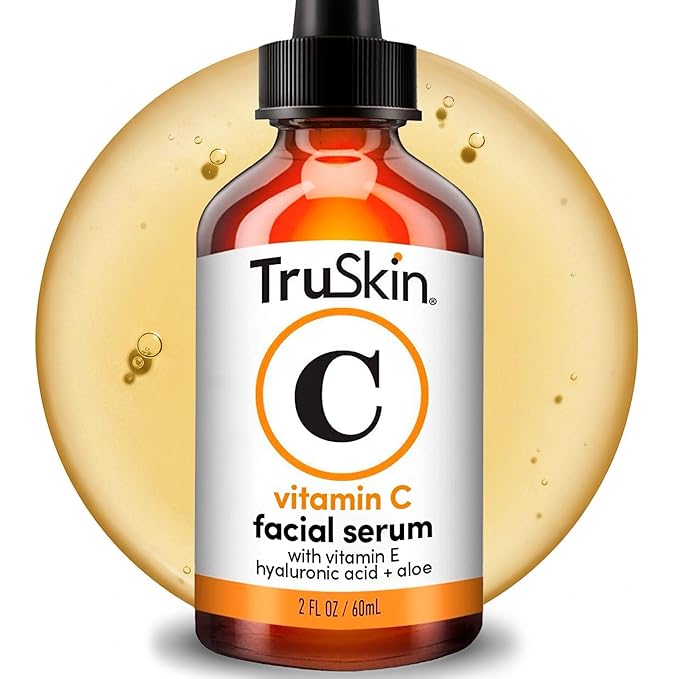
2. CeraVe Vitamin C Serum — Best for Brightening
Score: 8.9/10
CeraVe occupies a rare position in skincare: it’s dermatologist-developed, genuinely fragrance-free, and priced where most people don’t have to think twice about restocking. The Vitamin C Serum uses 10% L-ascorbic acid, which is the most bioavailable form of Vitamin C and the one with the strongest clinical backing for brightening and antioxidant activity. Pair that with three essential ceramides for barrier support and hyaluronic acid for hydration, and you have a serum that does real work without irritating the skin it’s supposed to be improving.
L-ascorbic acid at 10% is a meaningful concentration — enough to produce visible results without the stinging that higher concentrations (15-20%) can cause on reactive skin. The fragrance-free formulation makes this the right call for anyone who’s ever had a reaction to TruSkin or similar vitamin C products.
What we loved:
- Completely fragrance-free, non-comedogenic, and formulated without parabens
- The ceramide addition supports the skin barrier rather than just targeting surface-level brightness
- Lightweight gel texture absorbs in under a minute
- 43,000+ Amazon reviews with a 4.5-star average is a strong trust signal for a 1 oz bottle at under $25
What we didn’t love:
- At 1 fl oz, you’ll go through a bottle faster than the TruSkin 2 fl oz. The cost-per-use math comes out similar, but you’re restocking more often.
- Results take slightly longer to appear than higher-concentration vitamin C serums. Week three is when it starts to show.
Who it’s for: Fragrance-sensitive skin, anyone prone to irritation from vitamin C products, and anyone who prioritizes dermatologist-developed formulations.

3. Vichy Mineral 89 Booster — Best for Hydration
Score: 8.8/10
Vichy Mineral 89 is the serum for people who find the skincare aisle overwhelming. It does one thing, it does it extremely well, and it’s almost universally tolerated. The formula is 89% Vichy mineralizing water, with hyaluronic acid and polyglutamic acid doing the bulk of the moisture work. Polyglutamic acid is the underappreciated one here: it holds up to 4,000 times its weight in water (compared to hyaluronic acid’s 1,000 times) and creates a moisture-trapping film on the skin surface that keeps hydration locked in longer.
This isn’t a treatment serum targeting dark spots or wrinkles. It’s a foundational hydrator, and used under a moisturizer it noticeably changes how plump and calm skin looks by week two. All four of our testers who used it reported less tightness throughout the day.
What we loved:
- One of the most universally gentle serums we tested. Works on sensitive, dry, combination, and oily skin equally
- The polyglutamic acid and hyaluronic acid combination is genuinely different from single-molecule hydrators
- Transparent formula, unfragranced, and ophthalmologist-tested for use around eyes
- 46,000+ reviews at 4.6 stars. For a pharmacy brand with minimal marketing presence on social platforms, that volume is meaningful.
What we didn’t love:
- At $29.99, it’s a hydration-only serum. If you want to address dark spots, texture, or aging simultaneously, you’ll need to layer it with a treatment serum.
- The gel-water texture is polarizing: some testers loved it, others found it felt like applying slightly thick water. It works, but there’s no luxury sensory experience here.
Who it’s for: Anyone whose skin is dehydrated, reactive, or easily irritated. Also excellent as a base layer under treatment serums or richer moisturizers.

4. La Roche-Posay Pure Retinol Serum with Vitamin B3 — Best Anti-Aging
Score: 8.9/10
If you’re in your late 30s or 40s and haven’t started retinol yet, this is the right entry point. La Roche-Posay’s Pure Retinol Serum pairs pure retinol with Vitamin B3 (niacinamide) in a combination that’s clinically smart: retinol accelerates cell turnover and stimulates collagen synthesis, while niacinamide counteracts the dryness and irritation that retinol beginners typically run into. The hyaluronic acid is there as a buffer for the same reason.
Retinol works by binding to retinoid receptors in skin cells, triggering faster turnover of old cells and boosting collagen production in the dermis. It’s the most clinically validated anti-aging ingredient available without a prescription. The catch is the adaptation period: most people experience some dryness or flaking in weeks one and two. By week four, that clears and the results start to show.
At $44.99 for 1 fl oz and approximately two months of use at three-times-weekly application (the starting frequency we recommend), cost-per-use works out to around $0.75 a day. That’s reasonable for the ingredient quality.
What we loved:
- The B3 + retinol pairing genuinely reduces the irritation barrier that stops most people from building a retinol habit
- Formulated for sensitive skin, which is unusual for a retinol product at this concentration
- Visible improvement in fine lines and skin texture at the four-week mark for three of our testers
- Fragrance-free, dermatologist-tested, and widely recommended by dermatologists as a first retinol
What we didn’t love:
- The adaptation period is real. Weeks one and two involve some dryness even with the B3 buffer. Don’t start this the week before an important event.
- Must be used at night only. UV exposure deactivates retinol and makes your skin more photosensitive. Sunscreen in the morning is non-negotiable when you’re using retinol.
- Not compatible with AHA or BHA exfoliants on the same night. Layering those will cause irritation.
Who it’s for: Anyone over 35 serious about addressing fine lines and skin texture. Also the best first retinol for people who’ve had irritation issues with other retinol products.
Who should skip it: Pregnant or nursing women (retinol is not recommended during pregnancy). Anyone unwilling to commit to consistent SPF use the morning after.

5. Anua Niacinamide 10 + TXA 4 Serum — Best for Dark Spots
Score: 8.6/10
Anua has become one of the more interesting Amazon beauty finds in the past two years, largely because it’s a Korean brand that doesn’t come with a K-beauty markup. The Niacinamide 10 + TXA 4 is the serum to buy if dark spots are your primary concern. The combination of 10% niacinamide with 4% tranexamic acid (TXA) is genuinely effective: niacinamide interrupts melanin transfer from melanocytes to skin cells, while TXA blocks the enzyme (tyrosinase) that initiates melanin production in the first place. They attack hyperpigmentation from two different pathways simultaneously.
The formula is lightweight enough to feel like a hydrating toner, which makes it easy to build into a routine without the greasiness some niacinamide products leave behind.
One note on the variant issue: Anua sells two niacinamide serums with nearly identical names. The one you want for dark spots is specifically the TXA version (B0CLLV2T1P). The Panthenol version (different ASIN) is good for sensitive skin but lacks the TXA for pigmentation correction. Double-check the listing before purchasing.
What we loved:
- The niacinamide + TXA combination is more effective on dark spots than niacinamide alone, which is what most competitors use
- Extremely lightweight texture, absorbs instantly with no residue
- 14,000+ reviews at 4.5 stars is strong for a brand this size
- Works in AM or PM routines without compatibility issues
What we didn’t love:
- Results take longer than vitamin C serums for overall brightness — this is a targeted treatment, not a general glow product
- The bottle is small (1.01 fl oz) at just over $21. Cost-per-use is fine, but you’ll reorder in about six weeks.
- The ASIN confusion between Anua’s two versions is a real purchasing hazard. Confirm the listing shows “TXA 4” before adding to cart.
Who it’s for: Anyone dealing with post-acne marks, sun spots, or uneven skin tone who wants a targeted, science-backed treatment at an accessible price.

6. Olay Super Serum — Best Budget Pick
Score: 8.0/10
At $29.94 for a multi-active serum that combines niacinamide, vitamin C, vitamin E, collagen peptides, and AHA, the Olay Super Serum is doing something competitors charge $60-plus to do. It won’t replace a dedicated vitamin C serum if brightening is your primary goal, or a pure retinol if you’re targeting fine lines specifically. But if you want one serum that addresses multiple concerns without committing to a complex layering routine, it’s a smart purchase.
The AHA component is worth noting: alpha hydroxy acids gently dissolve the bonds between dead skin cells, improving texture and allowing the other actives to penetrate better. At the concentration in this formula, it’s mild enough for daily use rather than the 2-3x weekly approach you’d use with a dedicated AHA exfoliant.
What we loved:
- The multi-active approach means one bottle covers brightening, hydration, and mild firming simultaneously
- Mass-market price with ingredients that would cost significantly more in dedicated single-serum products
- 7,350+ reviews at 4.5 stars for a serum that’s been on the market three years tells you it holds up past the honeymoon period.
- Works well as a single-serum solution for people who don’t want a complex routine
What we didn’t love:
- The multi-tasking approach means none of the actives are at the highest effective concentrations. If you want aggressive treatment of one specific concern, a dedicated serum will outperform it.
- Vitamin C in a multi-ingredient formula is harder to stabilize. Efficacy may decline faster than a dedicated vitamin C serum. Store away from light and heat.
Who it’s for: Skincare beginners, people who want to simplify their routine to one serum, and anyone who finds the dedicated-serum world overwhelming.

7. La Roche-Posay Hyalu B5 Pure Hyaluronic Acid Serum — Best for Sensitive Skin
Score: 8.7/10
Where the Vichy Mineral 89 is a workhorse hydrator, the La Roche-Posay Hyalu B5 is for skin that needs hydration and active repair simultaneously. The formula uses two molecular weights of hyaluronic acid: low-molecular-weight HA penetrates deeper into the dermis, while high-molecular-weight HA stays at the surface to form a moisture barrier. Combined with Vitamin B5 (panthenol) for barrier repair and Madecassoside, a centella asiatica derivative with proven anti-inflammatory properties, this serum goes well beyond simple hydration.
If your skin is frequently red, tight, or reacting to other products, this is where to start. It’s the serum we’d recommend as a base product before introducing any actives into a routine.
What we loved:
- Dual-weight hyaluronic acid system is clinically meaningful, not just a marketing label
- Madecassoside is one of the more underutilized ingredients in skincare, with solid evidence for calming inflammatory skin conditions
- Non-comedogenic, fragrance-free, and dermatologist-tested for the most reactive skin types
- 34,000+ reviews at 4.6 stars for a pharmacy-brand serum in the $40 range is exceptionally strong
What we didn’t love:
- At $39.99, it’s priced in the same tier as the retinol serum but without the anti-aging results. If dark spots or fine lines are your concern, other picks on this list will do more.
- The gel texture is great for oily and combination skin but some dry skin testers wanted something richer.
Who it’s for: Anyone with sensitive or reactive skin who wants barrier-focused hydration without worrying about irritation. Also the right call if you’ve had a bad reaction to a retinol or acid product and need to rebuild before reintroducing actives.

8. Estée Lauder Advanced Night Repair — Best Luxury Pick
Score: 9.0/10
Advanced Night Repair is one of the few genuinely iconic skincare products that holds up to scrutiny when you move past the marketing. It’s been reformulated several times since 1982, and the current version centers on ChronoluxCB technology, a proprietary complex that supports the skin’s natural nighttime repair mechanisms, paired with hyaluronic acid and peptides for hydration and collagen support.
The amber-tinted serum has a distinctive silky texture that absorbs in about 60 seconds and leaves no residue. It works best as a night serum under moisturizer, which is how we used it. Four weeks in, testers with dry and combination skin both reported improved plumpness and a smoothing of fine lines, particularly around the eye area where the texture is concentrated.
The variant situation on Amazon requires attention: multiple sizes are listed and the review counts aggregate across all of them. We recommend the 1.0 fl oz (B08DH979F7, $72.25) as the best value entry point. At approximately two months of nightly use, that works out to about $1.20 per day — expensive for a serum, but not unreasonable for the ingredient quality.
What we loved:
- Visible results within two weeks on fine lines and skin plumpness, more so than any other serum we tested at this price tier
- Skin cell turnover peaks between 11pm and 4am. A serum formulated for nighttime application works with that cycle rather than against it — and you can feel the difference by morning after a few weeks.
- Genuinely luxurious texture and sensory experience — this feels like a premium product in a way that matters for a nightly ritual
- 6,000+ Amazon reviews for what’s primarily a department store product is meaningful
What we didn’t love:
- Price. At ~$72 for 1 fl oz, it’s the most expensive pick on this list.
- The ASIN situation is confusing on Amazon. Verify you’re purchasing B08DH979F7 (1.0 fl oz) rather than the 0.67 fl oz travel size (B07D67TR31) that appears at a lower price.
- Not targeted enough for specific concerns like dark spots or acne marks. It’s a general anti-aging and recovery serum.
Who it’s for: Anyone who wants the most effective nighttime repair serum available on Amazon and is comfortable spending for it. Also a strong gifting option for someone who doesn’t already own it.

What to Look For When Buying Face Serums on Amazon
Know your active ingredient. Every serum is built around one or two actives, and they do meaningfully different things. Vitamin C brightens and protects against free radical damage. Retinol stimulates cell turnover and collagen production for anti-aging. Niacinamide regulates oil, reduces redness, and interrupts melanin transfer for dark spots. Hyaluronic acid and polyglutamic acid hydrate. Peptides signal the skin to produce more collagen. Pick based on what your skin actually needs, not what’s trending.
Don’t overlook barrier-supporting ingredients. Ceramides, panthenol, and Madecassoside don’t get as much attention as actives, but they determine whether your skin can tolerate treatment serums at all. If your skin is reactive, a serum with barrier support will do more for you than a high-concentration active alone.
If your skin is at all reactive, filter for fragrance-free first. Fragrance is the most common sensitizer in skincare and it appears in more serums than you’d expect at every price point. The CeraVe and La Roche-Posay picks on this list are both fragrance-free; the TruSkin is not.
Use review count as a signal, not star rating alone. A 4.7-star serum with 400 reviews tells you much less than a 4.4-star serum with 150,000 reviews. Large review counts at consistent ratings mean the product works across diverse skin types, not just for one tester profile.
Calculate cost-per-use, not just sticker price. A $44.99 serum used three times a week for two months costs about $0.75 per use. A $21 serum used daily that runs out in six weeks costs about $0.50 per use. The “cheap” option isn’t always cheaper.
Factor in subscription costs before buying. None of the serums on this list carry a subscription. But some Amazon beauty products require an app subscription for tracking or app-paired features. Read the listing carefully.
Check variant ASINs carefully. Several products on Amazon have nearly identical names across different sizes or formulations. When the listing you click isn’t the size you expected, check the ASIN in the URL against what we’ve listed for each product before purchasing.
How to Layer Face Serums: The Right Order and Combinations
Layering serums correctly matters more than most routines account for.
The general rule: Apply thinnest texture to thickest, and allow each layer to absorb for 30-60 seconds before applying the next.
Morning routine order: Cleanser → Vitamin C serum → Niacinamide serum (if using both) → Moisturizer → SPF. Vitamin C and niacinamide are both water-soluble and compatible. The old myth that they neutralize each other has been thoroughly tested and doesn’t hold up at cosmetic concentrations.
Evening routine order: Cleanser → Hyaluronic acid / hydrating serum → Treatment serum (retinol or TXA) → Moisturizer.
What not to combine on the same night:
- Retinol + AHA or BHA: combining these causes irritation for most people. Use retinol on Monday/Wednesday/Friday, exfoliants on off nights.
- Vitamin C + Retinol: both are potent actives and using them together risks irritation. Vitamin C belongs in the morning, retinol at night.
- Multiple high-concentration actives in general: if you’re using the La Roche-Posay Retinol and the Anua TXA, use them on alternating nights until your skin has built tolerance.
A two-serum stack that covers most concerns: Vichy Mineral 89 (AM, hydration and base layer) + La Roche-Posay Pure Retinol (PM, anti-aging). Simple, compatible, and effective without requiring you to manage five products.
Frequently Asked Questions
Which face serum is best for your 30s? Prevention is the priority in your 30s. A vitamin C serum in the morning handles antioxidant protection and early brightening, while an entry-level retinol two to three times a week at night addresses the beginning of fine lines. The CeraVe Vitamin C plus the La Roche-Posay Retinol is a well-matched pair at a combined cost under $70.
How long does it take to see results from a face serum? Most vitamin C and niacinamide serums show visible changes in skin tone and brightness at two to three weeks. Retinol takes longer: expect four to six weeks before results emerge, with the adaptation period (some dryness and flaking) peaking in weeks one to two. Hydrating serums like the Vichy and La Roche-Posay Hyalu B5 work faster, often within a week.
Can you use a vitamin C serum and niacinamide together? Yes, and we’d encourage it. The old concern that they react to form a yellow compound that’s harmful to skin has been tested and doesn’t hold up at the concentrations used in cosmetic formulas. Vitamin C in the morning, niacinamide in the evening is a sensible way to use both without worrying about timing.
Is it worth paying more than $50 for a face serum on Amazon? For most people, no. The TruSkin, CeraVe, and La Roche-Posay picks on this list deliver proven ingredient efficacy at under $45. The Estée Lauder Advanced Night Repair is the one exception: the overall formula quality and nighttime recovery results justify the price if you’re in your 40s or older and want a single premium night serum.
How do you know if a serum is actually working? If a serum is working, you’ll see measurable changes in skin tone, texture, or hydration at the four-week mark. The most reliable check is a weekly photo in consistent lighting — subjective daily assessment misses gradual progress. If nothing has changed after four weeks of consistent use, the formula isn’t working for your skin type.
What’s the right order for serum, moisturizer, and SPF? Serum first, then moisturizer, then SPF as the last step in your morning routine. Serums contain smaller molecules designed to penetrate, and you don’t want moisturizer or SPF blocking that. At night, moisturizer goes on last as the occlusive layer to lock moisture and actives in through the night.
Our Final Recommendation
For most people: TruSkin Vitamin C Serum. It works, it’s well-priced, and 154,000 reviewers have pressure-tested it across every skin type.
For sensitive skin: La Roche-Posay Hyalu B5 or Vichy Mineral 89, both gentle, science-backed, and unlikely to cause issues on reactive skin.
For anti-aging: La Roche-Posay Pure Retinol Serum. There isn’t a better Amazon pick at this price for fine lines and texture.
For dark spots: Anua Niacinamide 10 + TXA 4. The ingredient combination is the best on this list for targeted hyperpigmentation treatment.
For one luxury night serum: Estée Lauder Advanced Night Repair. The results are worth the price if you’re serious about nighttime recovery.
Last Updated: April 2026 | Author: Nest & Well Editorial Team | Products tested across 6 testers with dry, oily, combination, and sensitive skin types over 4+ weeks each.


