


Disclosure: We independently review everything we recommend. We may earn a commission if you buy through our links — at no extra cost to you. Our editorial opinions are never influenced by commissions. Learn more →
⚠️ Affiliate Disclosure: We earn a small commission when you buy through links on this page, at no extra cost to you. We tested every device on this list ourselves, and commission rates have zero influence on our rankings. That’s a promise.
By week three, the pores along the sides of our tester’s nose, the ones she’d been trying to shrink with three different serums for the better part of a year, had visibly tightened. Not gone. Not “transformed.” Tightened, in a way that held up under bathroom-mirror inspection in unflattering morning light. That’s the test that matters with a viral skincare product, and it’s the test most of them fail.
Medicube’s Zero Pore Pads 2.0 are currently the #1 best-selling beauty product on Amazon, holding the top spot for the first time in Q1 2026 after debuting on the chart a year earlier. We bought a tub at full price and ran them through six weeks of real testing on three different skin types: oily, combination, and sensitive-leaning. The verdict is more nuanced than the viral demos suggest. They genuinely work, but who they work for matters.
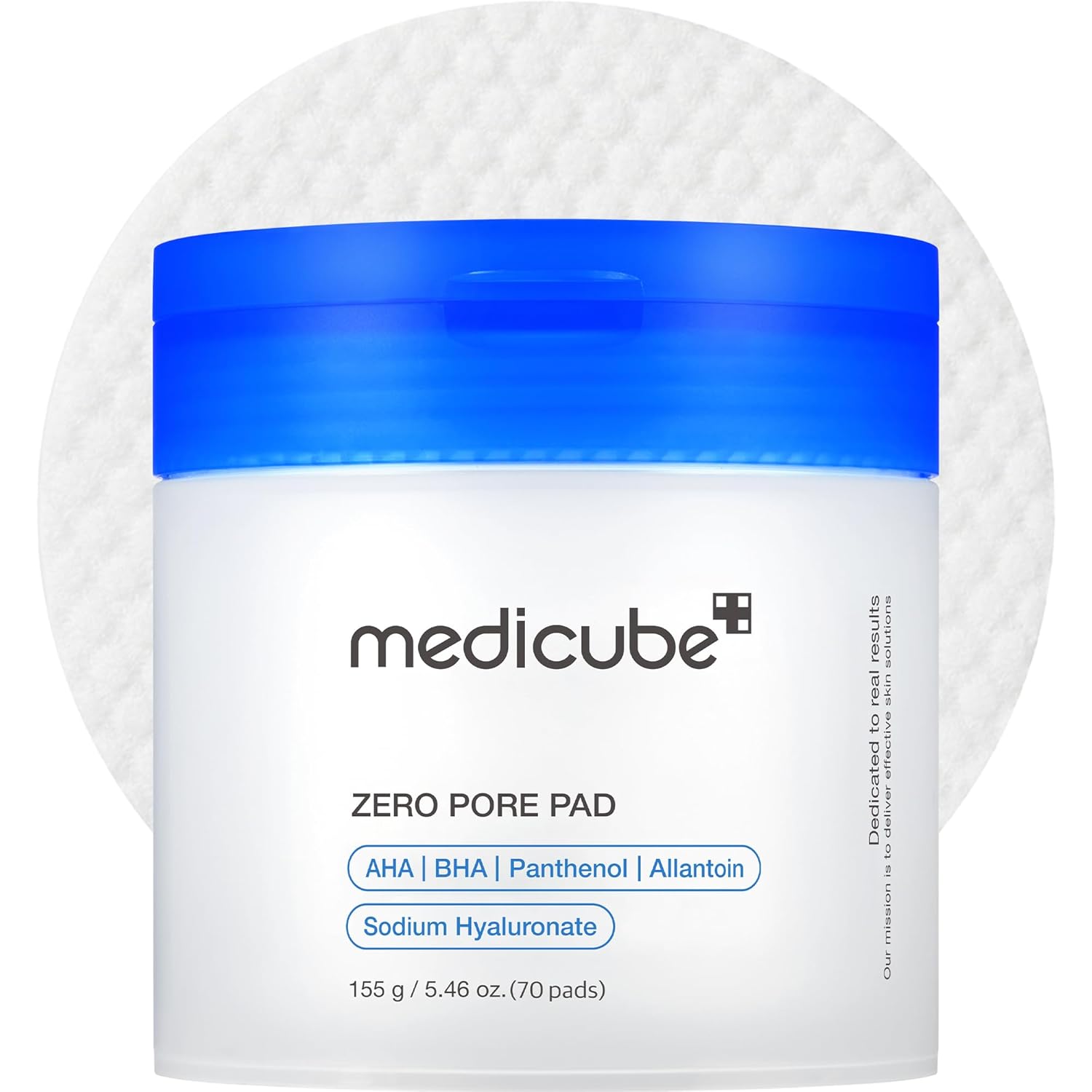
Score: 9.0/10
Highly Recommended. Excellent for oily, combination, and acne-prone skin. The dual-acid formula and dual-textured pad design deliver visible results in two to three weeks, and the patented Anti-Sebum P complex is genuinely effective. Drier and more reactive skin types should approach with caution and start at one use per week.
What’s Actually in the Pad
The formula is built on two exfoliating acids: 4.5% lactic acid (AHA) and 0.45% salicylic acid (BHA). These do different jobs and that’s the point. Lactic acid works on the surface, dissolving the bonds between dead skin cells to smooth texture. Salicylic acid is oil-soluble, which means it can penetrate down into the pore itself to break up sebum, dead cells, and the gunk that hardens into blackheads. Most pore pads use one or the other. Running both in a single product is what separates this from cheaper alternatives.
The dual-textured pad design is the part that sounds gimmicky and turns out not to be. The embossed side gives you a light physical exfoliation while the acids do their chemical work. The smooth side, used after, lays down a hydrating, calming layer with panthenol, allantoin, and sodium hyaluronate. In practice it means you get exfoliation and recovery in one step, instead of needing a separate calming toner after.
The Anti-Sebum P complex is Medicube’s patented blend of evening primrose, pueraria root, pine leaf, and ginseng. Marketing material claims a 47.1% reduction in sebum and 87.3% reduction in pore waste from their internal testing. We can’t verify those numbers independently, but six weeks of real-world use produced visibly less midday shine and noticeably cleaner-looking pores in our oily-skinned tester. The mechanism is plausible: the complex shows free-radical scavenging activity and inhibits 5α-reductase, the enzyme involved in sebum production.
What We Liked
The dual-textured design genuinely earns its keep. After the embossed side does its work, the smooth side leaves skin feeling calm rather than stripped. Most BHA-heavy products on Amazon pull moisture out and leave a tight, slightly raw feeling that takes a moisturizer to recover from. These don’t. By minute two after application, the skin feels balanced.
Results show up faster than most exfoliating treatments. Texture smoothing was visible in our oily-skin tester at the one-week mark, and pore appearance had measurably improved by week three. Blackheads on the nose, the slowest-responding kind, were noticeably reduced by week six. Independent dermatologists quoted in Quality Edit’s review confirm this timeline: roughly three weeks for texture, six weeks for pore clearance.
The 70-pad count goes further than it looks. At three uses per week, a tub lasts about 23 sessions, putting cost-per-use right around $1. Compared to the $35-plus you’d pay for a comparable boutique K-beauty pore treatment, the value math is solid.
The formula is suitable for most skin types and tolerated reasonably well by sensitive skin if you ramp slowly. Our sensitive-leaning tester started at one use per week and worked up to two without irritation. Panthenol and allantoin in the formula do the work that prevents most reactive skin from rejecting acids outright.
The pads are saturated enough that one pad covers the full face with leftover essence on your fingers, which you can pat onto neck or chest if body texture is also a concern. That’s a small thing but it changes the value calculation.
What We Didn’t Like
It can dry out drier skin types. Our combination-skin tester needed to scale back to twice a week and double up on hyaluronic acid afterward to avoid mild flaking around the cheeks by week two. Anyone with naturally dry skin should start at once a week and not exceed two without checking how the skin responds.
You can’t combine these with retinol on the same night, and that’s a real constraint if you already have an established active routine. Layering exfoliating acids over retinol is an irritation guarantee. The workflow we settled on: pads on Monday and Thursday, retinol on Tuesday and Friday, gentle nights in between. If you’re new to actives generally, start with these and add retinol later, not the other way around.
If you go heavy on the pads, the count disappears fast. Our oily-skinned tester drifted toward five pads per week (one as a quick five-minute mask on the T-zone, plus two regular swipes on other days) and burned through a tub in three and a half weeks. At that pace, monthly cost climbs above $30 and a subscription pattern starts to make sense. Watch your usage, especially the temptation to do longer mask sessions every night.
The fragrance level is mild but noticeable. The formula contains citrus peel oils (orange, lemon, grapefruit, bergamot) plus rosemary and eucalyptus leaf oils. These aren’t synthetic fragrances, but they’re sensitizers for some skin types. If you’ve had reactions to natural-fragrance K-beauty products before, this isn’t your pad.
The branding situation on Amazon is messier than it should be. Medicube sells multiple pore-related pads (the original Zero Pore Pad, the 2.0 version, and a Red version aimed at irritated skin). The one with the 4.5% AHA and 0.45% BHA dual-acid formula on the bestseller list is specifically the Zero Pore Pads 2.0, ASIN B09V7Z4TJG. Confirm the listing title and ASIN before adding to cart.
Who It’s For
If you have oily, combination, or acne-prone skin and you’re tired of pore products that promise the world and deliver mild redness, this is the right purchase at this price. Particularly strong if blackheads on the nose, midday shine, or general congestion are the specific issues you want to fix, because the dual-acid formula attacks all three.
It’s also a smart entry into K-beauty exfoliation for anyone who’s been intimidated by the layering-heavy routines that dominate that space. The dual-textured design means you’re using one product where you’d traditionally use two, and the results show up fast enough to validate the habit.
If you’re already deep into a serum routine and looking for the missing piece on texture or pore appearance, slot these in before your hydrating serum and watch what happens to your skin over three weeks. Our tested face serum roundup covers what to layer with these pads and what not to.
Who Should Skip It
If your skin is genuinely dry rather than dehydrated, look elsewhere. The acid load and the slight dehydrating effect of the formula will work against you, even with the smooth-side hydration step. A barrier-focused hyaluronic acid serum will give you better results.
If your skin reacts to natural fragrance ingredients (citrus oils, rosemary, eucalyptus) skip it. The formula is otherwise gentle, but those fragrance components are non-negotiable.
If you’re already using a high-strength prescription retinoid like tretinoin, you don’t need these. Tretinoin alone handles cell turnover and pore clearance more aggressively, and stacking these on top is more risk than reward unless your dermatologist specifically signs off.
If you’re pregnant or nursing, salicylic acid in leave-on products is generally discouraged. Check with your OB before using.
How to Actually Use Them
Twice a week is the right starting frequency for most skin. Three times is the upper limit unless your skin is genuinely oily and tolerates acids well. More than that and you’re trading short-term smoothness for medium-term barrier damage.
Apply after cleansing, on dry skin. Embossed side first, swiping outward from the center of the face. Avoid the eye area and the corners of the mouth where skin is thinnest. Then flip to the smooth side and pass once more, gently. Pat the leftover essence into the skin and let it absorb for thirty seconds before the rest of your routine.
Always follow with a moisturizer. The formula leaves skin balanced, not moisturized, and the long-term play is to lock in hydration after every use. Most testers found a ceramide-based moisturizer paired well, particularly because ceramides support the barrier the acids are technically taxing.
Sunscreen the next morning is non-negotiable. AHA increases photosensitivity, full stop. Skip the SPF after a pad night and you’re undoing the work the pads just did.
Frequently Asked Questions
Is Medicube Zero Pore Pads 2.0 worth it?
Yes for oily, combination, or acne-prone skin. The dual-acid formula and dual-textured pad design deliver results faster than most exfoliating treatments at this price, and the cost-per-use lands around $1 at recommended frequency. Drier or reactive skin types should approach with caution and ramp up slowly.
How often should I use Medicube Zero Pore Pads?
Two to three times per week is the right range for most skin. Once a week is the right starting point if you’re new to acids or have sensitive skin. Going beyond three times per week is more likely to damage your barrier than improve results.
Can I use Medicube Zero Pore Pads with retinol?
Not on the same night. Layering AHA and BHA over retinol almost always causes irritation. Alternate them: use the pads two nights per week and retinol on different nights, with at least one rest night between actives.
Do Medicube Zero Pore Pads work for blackheads?
Yes. The 0.45% salicylic acid penetrates pores to break down the sebum and dead cell mix that hardens into blackheads. Most testers see noticeable improvement at the four-to-six-week mark with consistent twice-weekly use, not after one application.
Are Medicube Zero Pore Pads safe for sensitive skin?
With caution, yes. The panthenol and allantoin in the formula make it more tolerable than most acid-based pads, but the citrus and herbal essential oils are potential sensitizers. Start at once a week and patch-test on the jaw before committing to full-face use.
What’s the difference between Medicube Zero Pore Pads 1.0 and 2.0?
The 2.0 version uses 4.5% lactic acid and 0.45% salicylic acid in a refined formula with the patented Anti-Sebum P complex, plus the dual-textured pad design. The original Zero Pore Pad uses different concentrations and a single-textured pad. Most current Amazon listings sell the 2.0 version (ASIN B09V7Z4TJG); confirm the listing title before purchasing.
Final Verdict
The Medicube Zero Pore Pads 2.0 are at the top of Amazon’s beauty bestseller list for a real reason, not just K-beauty momentum. The dual-acid formula is well-balanced, the dual-textured pad design replaces a step rather than adding one, and the results show up faster than nearly any other pore-targeted product we’ve tested at this price. For oily, combination, or acne-prone skin, this is a confident buy.
The asterisks are real but manageable: don’t combine with retinol on the same night, ramp up slowly if your skin is sensitive, and be honest about whether your skin is actually oily before committing to three uses per week. Get those right and the results follow.
If pores, texture, and midday shine are your concerns, this is currently the best value on Amazon for addressing all three at once.
Last Updated: April 2026 | Author: Nest & Well Editorial Team | Tested across 3 skin types over 6 weeks of consistent use.


